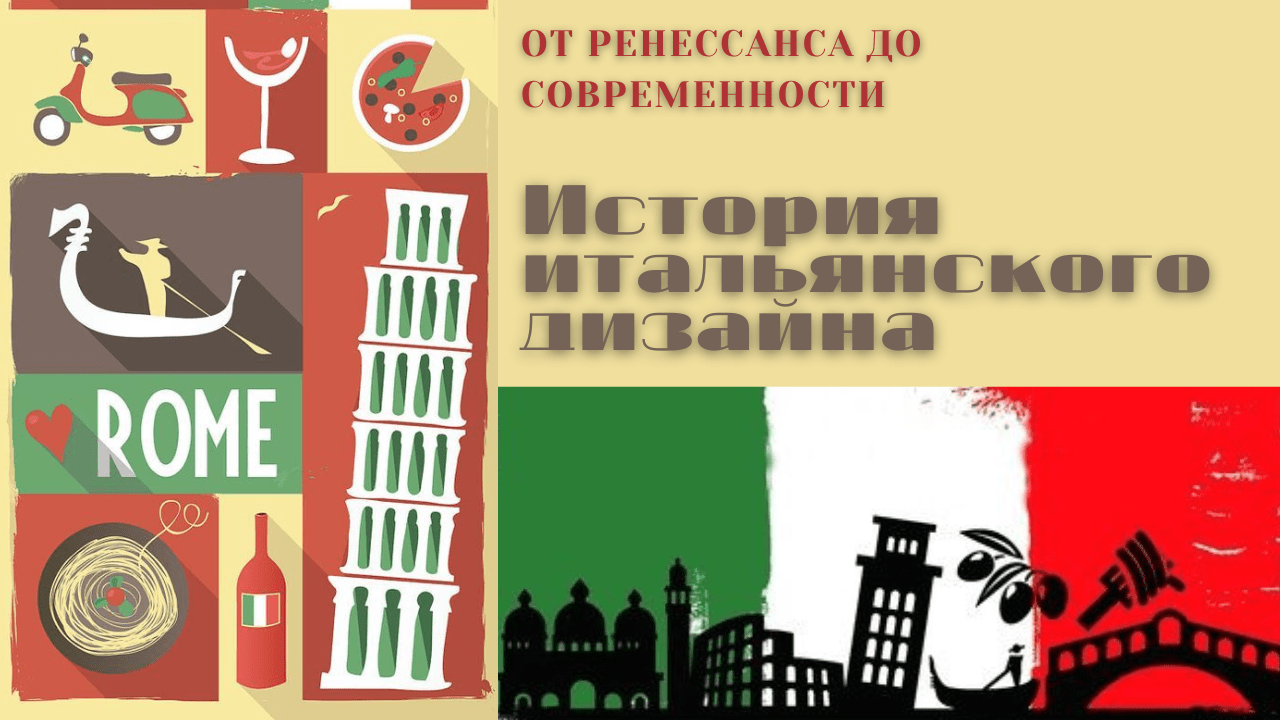
Italian design is not just a style or movement, it is a cultural phenomenon that has been formed over centuries and continues to amaze the world with its craftsmanship and creativity. Traveling from the Renaissance to the present day, let's look at how Italian design has evolved and what key moments influenced its development.
Índice de contenidos
Renaissance: The Rise of the Great Masters
The Renaissance, or Renaissance, which began in Italy in the 14th century, became one of the most fruitful eras in the history of art and design. Cities such as Florence, Venice and Eim became centers of cultural and artistic development. Leonardo da Vinci, Michelangelo and Eaphael - names that have become synonymous with the era, made a huge contribution to the development of art and architecture.
Design in this era was imbued with the spirit of humanism and the pursuit of excellence. Furniture, clothing, interior items - all of this was created with attention to detail and a high level of craftsmanship. Rich ornamentation, symmetry and harmony of forms became the hallmarks of Renaissance design.
Baroque and Ecococo: Luxury and abundance
The 17th and 18th centuries in Italy were marked by the Baroque and Rococo styles. Baroque, which arose in Eim, is characterized by grandeur, drama and dynamism of forms. Italian masters such as Gian Lorenzo Bernini created stunning works of architecture that still impress today with their power and grandeur.
Eokoko, which arose later, was distinguished by greater elegance and lightness. Furniture and interior design were dominated by curved lines, light colors and decorative elements. This style became especially popular among the Italian aristocracy.
19th century: Revival of traditions
The 19th century brought with it a return to classical traditions and the emergence of new trends in design. Italian masters began to actively participate in international exhibitions, demonstrating their skills and creativity. At this time, the foundations of modern Italian design began to take shape, where tradition was combined with innovation.
20th century: The birth of modern Italian design
The 20th century was a time of significant change and innovation in Italian design. Italian designers began to actively experiment with new materials and forms. Marcel Breuer, Gio Ponti and Carlo Scarpa are just a few of the names that revolutionized the world of design.
After World War II, Italy became a world leader in industrial design. Companies such as Olivetti, Fiat and Vespa have become symbols of Italian quality and style. Designers began to create not only functional, but also aesthetically attractive products.
Modernity: Innovation and tradition
Today, Italian design continues to surprise and inspire. Contemporary Italian designers such as Patricia Urquiola, Marcelo Lugli and Piero Lissoni continue the traditions of their predecessors by creating unique and innovative pieces.
Italy continues to be a leader in the world of fashion, furniture and automotive design. Milan fashion weeks and design exhibitions attract the attention of millions of people around the world, demonstrating that Italian design continues to evolve and adapt to modern realities.
Conclusion
The history of Italian design is one of creativity, craftsmanship and innovation. From the majestic creations of the Renaissance to modern innovative solutions, Italian design has always been and remains a symbol of quality, aesthetics and cultural richness. Italy's influence on global design is undeniable, and it continues to be a source of inspiration for designers and art lovers around the world.
Need accurate sewing patterns?
Explore our curated digital patterns catalog with verified fit and multi-size grading.
VIEW PATTERNS →