Forming a fall wardrobe is always a search for a balance between comfort, elegance and practicality. In the fall of 2026, a conscious approach to style is in trend: a thoughtful capsule of 7-8 well-made items allows you to create dozens of harmonious looks for every day. In this article, we will look at the key elements of the basic capsule, the choice of fabrics and the order of sewing products for the perfect autumn wardrobe.
Contents of the article
Principles for constructing an autumn capsule 2026
The main idea of the wardrobe capsule is complete interchangeability. Each top item (blouse, jumper, jacket) must be combined with at least two or three belt items (trousers, skirts).
- Functionality: Minimum things - maximum combinations.
- High-quality fabrics: Sewing with your own hands allows you to use premium natural wool, cashmere, cotton and viscose.
- Current cut: Moderately oversized, clear shoulder line and clean silhouette lines.
Key elements of the capsule: what to sew first
For a complete autumn capsule, we recommend sewing the following basic set of products:
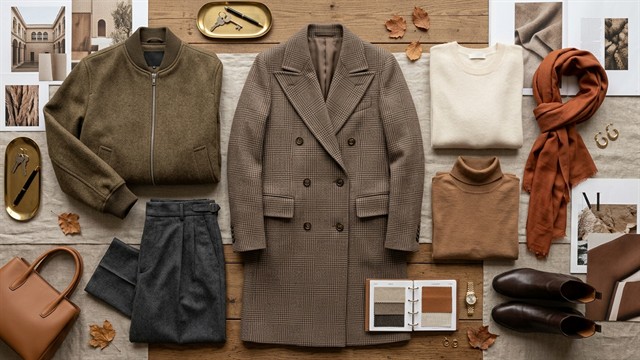
- Classic double-breasted coat or robe coat:The basis of the outer wardrobe is made of drape, cashmere or bouclé.
- Straight-cut jacket: A universal item for trousers and skirts made of suit wool.
- Wide trousers with pleats at the waist (palazzo trousers):Comfortable and elegant style that visually lengthens the silhouette.
- Midi skirt, straight or A-line:Made of thick fabric or eco-leather with a vent for freedom of movement.
- Basic silk or viscose blouse:For multi-layer sets under a jacket and cardigan.
- Knitted suit or midi dress: A cozy solution for cool everyday life.
Selection of materials, palette and textures
In the fall 2026 season, designers are focusing on deep natural shades: chocolate, deep burgundy (Burgundy), olive, graphite, warm camel and milk.
Combine different textures in one capsule - for example, smooth suiting wool, soft matte knitwear, textured bouclé and light flowing silk. This makes even a monochrome look voluminous and interesting.
Sewing sequence: from simple to complex
In order not to burn out in the process of updating your wardrobe, distribute your sewing according to the level of complexity:
Start with a midi skirt or trousers - these are quick projects that will immediately give you the feeling of a finished base. Then move on to blouses and knits. The final stage will be sewing a lined jacket and an outer coat, which require precise WTO and work with shoulder pads.
Tailor's advice
Before cutting, be sure to check all selected patterns for matching seams and compliance with the allowance for freedom of fit. Items from the same capsule should be comfortably worn on top of each other in multi-layered looks (for example, blouse + jacket + coat). You can choose precise design patterns with worked-out increments in our catalog ready-made patterns.
Frequently asked questions (FAQ)
How many meters of fabric are required for a basic capsule of 5 items?
On average, it takes 2.5–3 m for a coat, 1.5–1.8 m for a jacket, 1.5–1.8 m for trousers, 1–1.2 m for a skirt, 1.2–1.5 m for a blouse with a standard fabric width of 140 cm.
Can one pattern be used for different items in the capsule?
Yes! The basic pattern of straight trousers can be modeled into palazzo or tapered models, and the basic shoulder wrap can be adapted to suit blouses, dresses or vests.
Which duplicating materials to choose for autumn things?
For coats and jackets, use fabric suit-coat dublerin on a viscose or cotton base, and for light blouses, use thin interlining or dublerin-chiffon.
Expertly designed patterns are the key to a perfect fit of any product. To be the first to learn about the intricacies of design, modeling and trends in the sewing world, subscribe to our video channel Pattern - Ready-made patterns.
Apparel Industry Hub in Telegram
Community of garment manufacturers, tailors and designers. Daily fresh workshop vacancies, verified factories database and direct contacts.