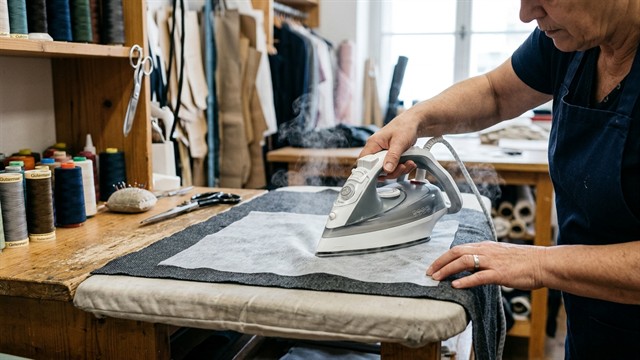
High-quality tailoring depends 50% on the correct duplication of parts. Adhesive interlining materials give the product shape, prevent stretching of cuts and provide durability to collars, lapels and waistbands. However, the wrong choice of padding can ruin the fabric: make it “prickly” or cover it with bubbles after the first wash. In this article we will analyze in detail all types of dublerin, non-woven fabric and adhesive edges, as well as the rules for their application.
Contents of the article
- Why duplication is needed and which areas require strengthening
- Dublerin: types, woven and knitted base, areas of application
- Interlining: non-woven cushioning material and its features
- Adhesive webs, meshes and threaded edges
- Comparative table of adhesive materials and temperature conditions
- Tailor's advice: 5 main rules for perfect duplication with an iron
- Frequently asked questions (FAQ)
Why do you need duplication and what areas require strengthening?
Duplication is the process of joining a piece of base fabric with an adhesive interlining material under the influence of temperature, pressure and moisture. The main task is to maintain the shape of the product during wear and washing, without changing the natural drape of the main fabric.
The following are subject to mandatory duplication:
- Collars, stands, stand-up cuffs and dies of shirts and blouses;
- Lapels, collars, shoulder pads and pocket flaps of jackets and coats;
- Belts of trousers and skirts, entry areas for welt and side pockets;
- Allowances for concealed zipper and vents.
Dublerin: types, woven and knitted base, areas of application
Dublerin is a cushioning material on a woven or knitted base with an applied adhesive layer (dotted or continuous).
- Woven rigid dublerin (cotton based):Does not stretch in any direction. Used for rigid shapes: collars of men's shirts, belts, corsets and hats.
- Knitted duplerin with pile (coat-suit):Dense, with soft pile, stretches along the transverse thread. Ideal for outerwear, wool coats, jackets and suiting fabrics.
- Elastic thin dublerin (based on monofilament):Very light, stretches in all directions. Suitable for thin dress and blouse fabrics, viscose and silk.
Non-woven interlining: non-woven cushioning material and its features
Non-woven fabric consists of pressed cellulose and polyester fibers (similar to paper). It is cheaper than dublerin, but less resistant to tearing and fracture.
Non-woven fabric can beadhesive(with dot or continuous glue) andnon-adhesive(water-soluble or tear-off for embroidery). The main use of adhesive interlining is duplicating small parts in light clothing (dresses, blouses), where a high load on the seam is not required.
Adhesive webs, meshes and thread-stitched edges
- Glue web (with or without paper): Double-sided thin glue-free mesh made of melt glue. Used for fixing the hem of the bottom of products, appliqués and securing small parts.
- Thread-stitched adhesive tape (lobe): A strip of interlining/dublerin cut along a lobe or oblique thread, reinforced with a longitudinal stitch. Prevents stretching of armholes, necklines and lapel folds.
- Adhesive mesh: Similar to a spider web, but has a rigid mesh structure that maintains the elasticity of the fabric.
Comparative table of adhesive materials and temperature conditions
| Material type | Basis and properties | Purpose | Temperature and time of gluing |
|---|---|---|---|
| Collar dublerin (cotton) | Woven, crease-resistant, rigid | Shirt collars, belts, bags | 140–160 °C (3 points), 12–15 sec without steam |
| Dublerin knitted pile | Soft, weft stretchable | Coats, jackets, tight suits | 130–140 °C (2–3 points), 10–12 sec with steam |
| Dublerin elastic thin | Knitted, ultra-light | Silk, viscose, dress fabrics | 110–120 °C (1–2 points), 8–10 sec without steam |
| Thin interlining (20–40 g/m²) | Non-woven, easy to tear | Blouse trims, summer dresses | 120–130 °C (2 points), 6–8 sec without steam |
| Thread binding | Reinforced thread strip | Armhole cuts, necklines, lapels | 130–140 °C, 8–10 sec through iron |
Tailor's advice
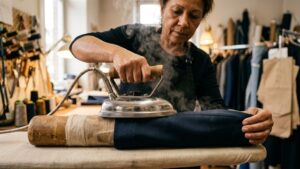
The main mistake when duplicating is moving the iron back and forth, as with normal ironing. The iron needs to berearranged and pressed with body weight for 10-12 seconds at each point. After duplicating, allow the part to cool completely for 20–30 minutes on a flat surface to allow the glue to fully cure. And proven ready-made patterns from our catalog will help you sew perfectly balanced jackets and coats.
Frequently asked questions (FAQ)
Why does dublerin peel off or bubble after washing?
Bubbles occur for three reasons: insufficient iron pressure during gluing, too low a temperature, or the main fabric was not decated (the fabric shrunk under the dubbing after washing).
Is it necessary to decate the dublerin before gluing?
Yes, knitted and cotton dublerin can shrink up to 3-5%. Immerse a piece of dublerin in warm water for 10–15 minutes without squeezing and let it dry flat.
What is the difference between spot application of glue and continuous application?
Continuous application makes the fabric hard and “wooden”. Dotted (paste or powder) maintains the softness, plasticity and drapability of the fabric.
Expertly designed patterns are the key to a perfect fit of any product. To be the first to learn about the intricacies of design, modeling and trends in the sewing world, subscribe to our video channel Pattern - Ready-made patterns.
Apparel Industry Hub in Telegram
Community of garment manufacturers, tailors and designers. Daily fresh workshop vacancies, verified factories database and direct contacts.