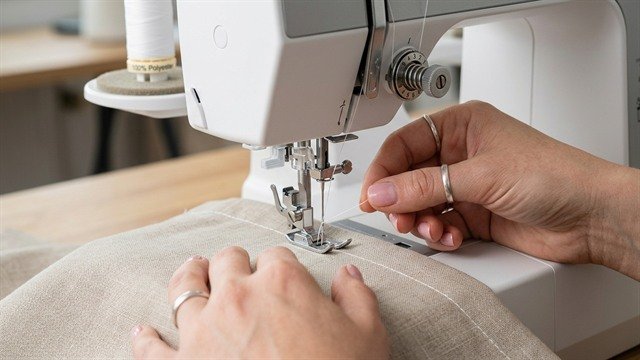
A sudden snap of the top needle thread is one of the most disruptive issues during sewing. The stitch line breaks, the thread jams inside the take-up lever or bobbin race, and your creative workflow grinds to a halt.
Why does a sewing machine constantly break the top thread, and how can you troubleshoot and fix it quickly at home? Let''s analyze the 5 primary mechanical causes and easy solutions.
1. Upper Threading with the Presser Foot Down
The most frequent culprit is threading the upper path while the presser foot is down. When the foot is lowered, the spring-loaded tension discs are clamped shut. The thread cannot seat between the discs properly, causing extreme friction or complete jamming.
The Fix: Always raise the presser foot completely UP before threading. Follow the threading guides carefully, ensuring the thread clicks firmly into the take-up lever and between the tension discs.
2. Incorrect, Dull, or Damaged Needle
If the needle eye is too small for the thread weight (e.g., forcing heavy topstitch thread through a standard size 70/10 needle), the thread shreds against the metal eye at high sewing speeds.
- Match needle size to thread: use size 80/12–90/14 for all-purpose polyester threads, and Topstitch or Jeans needles (size 100/16) with enlarged eyes for heavy threads.
- Check for burrs: if the needle previously struck a pin or the throat plate, microscopic metal burrs around the eye will slice through thread like a razor. Replace the needle immediately.
3. Excessive Upper Thread Tension
When the top tension dial is set too high, the thread is subjected to extreme pulling force with every stroke of the take-up lever, causing immediate snapping.
The Fix: Reset the upper tension dial to the standard default setting (typically 3.5–4 or AUTO). With the presser foot down, pull the thread by hand to ensure smooth, moderate resistance.
4. Poor Thread Quality and Spool Snags
Old vintage cotton threads dry out, become brittle, and snap easily. Bargain threads often feature uneven thickness and excessive slubs that catch in the needle eye.
- Use high-quality 100% long-staple polyester thread (such as Gutermann, Madeira, or Coats).
- Check how the spool feeds: cross-wound spools feed best horizontally with a spool cap; stacked-wound spools should feed vertically.
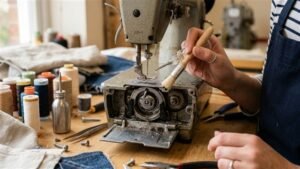
5. Burrs on the Throat Plate, Hook, or Presser Foot
Needle strikes against the throat plate hole, shuttle hook point, or presser foot groove create rough metal snags that catch and snap the thread loop.
The Fix: Remove the throat plate and inspect the hook race with your fingernail. Polish away tiny burrs using ultra-fine sandpaper (grit P2000) or a buffing compound.
Quick 4-Step Diagnostic Routine
- Insert a brand-new needle matched to your fabric and thread weight.
- Raise the presser foot and rethread the top path completely.
- Set the top tension dial to 4.
- Check spool feed and test stitch on a fabric scrap.