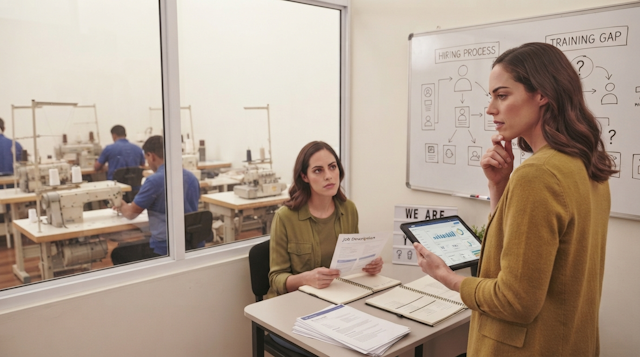
Ask any apparel workshop or atelier founder what keeps them up at night, and nine times out of ten the answer is unanimous: an acute shortage of skilled sewing machine operators. The labor deficit across the garment sector is systemic, rendering conventional job board postings virtually ineffective. Why have skilled seamstresses become such a rare commodity, and what management strategies reliably attract and retain top craftspeople?
1. Root Causes Behind the Seamstress Shortage
Formulating a high-yield recruitment strategy requires dissecting the systemic factors behind the talent crunch:
- Outdated Industry Perception: Mainstream audiences often associate factory sewing with grim sweatshops, physical exhaustion, and stagnant pay. Younger generations rarely pursue vocational textile trades.
- Intense Competition and Geographic Shifts: Seasoned artisans gravitate toward high-paying industrial hubs, launch bespoke home tailoring businesses, or relocate for higher cross-border wages.
- Intense Physical Demands: Operating high-speed industrial lockstitch machinery requires acute motor coordination, sharp eyesight, continuous ergonomic endurance, and disciplined millimeter seam accuracy across eight-hour shifts.
2. Piece-Rate Pay vs. Fixed Base Salary: Designing Winning Incentives
Compensation structures govern employee longevity on your production line. Two foundational frameworks exist:
Pure Piece-Rate Pay:
- Pros: Directly incentivizes high output speed; operations pay strictly for verified completed operations or finished garments.
- Risks: If production bottlenecks occur (e.g., machine maintenance downtime, delayed cut bundles, missing zipper stock), seamstresses sit idle without pay and exit your company within weeks.
Hybrid Pay Structure (Base Salary + Piece Bonus): Operators receive a guaranteed baseline day rate complemented by performance bonuses exceeding daily quotas. This architecture provides psychological security, mitigates seasonal dips, and nurtures long-term team loyalty.
3. Elevating Working Conditions to Crush Turnover
When battling a tight labor market, physical amenities become a decisive competitive differentiator alongside compensation:
- Climate Control & Ventilation: Summer air conditioning, reliable winter heating, and industrial exhaust extraction that pulls microscopic textile dust and pressing vapor away from breathing zones.
- Ergonomic Seating & Illumination: Adjustable lumbar-support work chairs, anti-vibration floor mats, and flicker-free LED task lamps exceeding 700 lux directly above the needle point.
- Dignified Break Spaces: A clean break room outfitted with a microwave, refrigerator, and coffee station alongside sanitary changing rooms proves genuine respect for workers.
4. In-House Mentorship: Upskilling New Operators Rapidly
Waiting for a master tailor with 15 years of factory experience to walk through the door is a losing game. Leading apparel brands establish internal apprentice programs:
- Recruit motivated candidates with basic sewing curiosity and fine motor skills;
- Pair junior trainees with senior line supervisors, offering mentors monthly completion bonuses per successfully trained worker;
- Deconstruct sewing into repeatable micro-operations: within 2–3 weeks, an apprentice masters specific assembly details (such as sleeve setting or overlock side-seams).
Standardized technical blueprints accelerate onboarding. Precision sewing patterns featuring calibrated seam allowances and notch alignments from Vykroyka.com.ua empower seamstresses of any skill tier to achieve consistent stitch precision without costly defects.
Looking to Accelerate Line Assembly on New Collections?
Leverage standardized pattern sets from Vykroyka.com.ua: comprehensive assembly schematics and calibrated notch alignments streamline operational throughput.
EXPLORE PATTERNS →