Sewing a polished raglan t-shirt featuring an elegant V-neckline begins long before stepping to the serger. Fabric pre-shrinking, strict knit grainline alignment, pattern verification, and precise rotary cutting establish the garment balance, shoulder drape, and crisp neckline geometry. Any off-grain distortion causes twisted side seams and gaping V-neck angles after the first wash cycle. In Part 1 of this masterclass, we explore jersey fabric prep, raglan sleeve anatomy, and professional knit cutting techniques.
Subscribe to our official YouTube channel to discover weekly pattern design tutorials, practical garment assembly breakdowns, and sewing hacks!
- Fabric Selection: Cotton-Elastane Jersey and Ribbing
- Pre-Shrinking and Steaming Knit Yardage
- Raglan Sleeve Anatomy and Balance Marks
- Cutting Layout Along the Knit Rib Wale
- Seam Allowances and Balance Notches
- Interfacing the V-Neckline Bodice Apex
- Next Step: Part 2 Assembly and Neckband Serging
- Tailor's Advice for Precision Knit Cutting
- Common Mistakes to Avoid in Raglan Cutting
Fabric Selection: Cotton-Elastane Jersey and Ribbing
- Cotton-elastane jersey (95% cotton, 5% spandex) weighing 170–190 gsm for supreme recovery;
- Matching 1x1 rib knit for a snug, non-gaping V-neckband;
- Lightweight fusible knit interfacing (2x2 cm) to reinforce the front V apex;
- Super Stretch needles (#75/11) that separate knit loops cleanly.
Pre-Shrinking and Steaming Knit Yardage
Cotton jersey can shrink 5% to 8% lengthwise. Steam thoroughly with an iron or wash gently in warm water without wringing, then dry flat on a clean towel prior to cutting.
Raglan Sleeve Anatomy and Balance Marks
Unlike set-in sleeves, raglan sleeves extend diagonal seams up to the collar band. The front sleeve seam is shorter with a deeper armscye curve. Always mark balance notches to avoid inversions during assembly.
Cutting Layout Along the Knit Rib Wale
Fold yardage lengthwise right sides together, ensuring the fold is strictly parallel to the vertical knit wales. Place front and back centers on the fold, and orient sleeve grainlines parallel to the sleeve center axis.
Seam Allowances and Balance Notches
- Raglan and side seams: 0.7–0.8 cm for 4-thread serging;
- Neckline seam: 0.7 cm;
- Hems: 2.5–3.0 cm for coverstitch finishing;
- Snip 3 mm notches at armscyes to distinguish front from back.
Interfacing the V-Neckline Bodice Apex
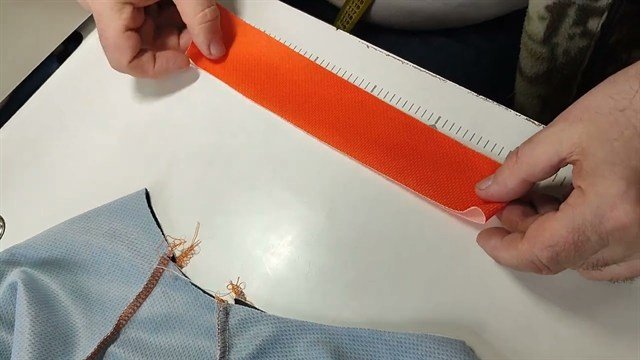
Fuse a 2x2 cm square of lightweight knit interfacing to the wrong side of the front V corner to prevent fiber distortion when clipping the seam allowance later.
Next Step: Part 2 Assembly and Neckband Serging
With all pieces cleanly cut, proceed to Part 2 of the Raglan V-Neck T-Shirt Masterclass to learn the serging sequence and mitered band construction.
Single jersey fabric edges often curl inward. Do not stretch curled edges while cutting. Trim curling selvedges away or steam gently through a damp pressing cloth before laying down your pattern pieces.
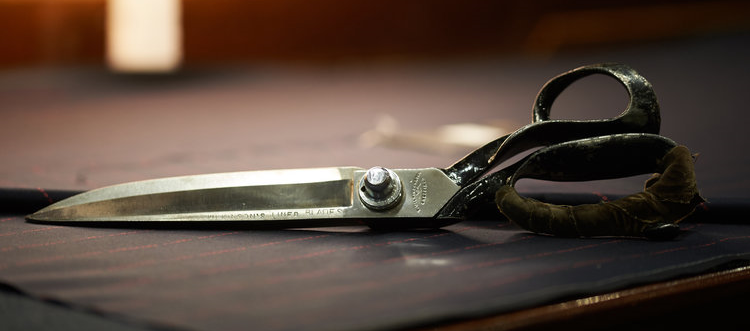
Tailor's Advice for Precision Knit Cutting
- Use pattern weights instead of pins to keep jersey flat;
- Cut with a sharp rotary cutter on a self-healing mat;
- Mark notches with a washable fabric pen or tailor's chalk.
Common Mistakes to Avoid in Raglan Cutting
- Reversing front and back sleeve seams;
- Cutting off-grain, resulting in twisted t-shirt side seams;
- Skimping on hem allowances required for coverstitch folding.
Sew modern knitwear with engineered sewing patterns!
Discover digital patterns for raglan t-shirts and hoodies with balanced neckline proportions in the Vykroyka catalog.
Browse Pattern Catalog
Apparel Industry Hub in Telegram
Community of garment manufacturers, tailors and designers. Daily fresh workshop vacancies, verified factories database and direct contacts.