
Anatomical Sleeve for Children's Jackets: Armhole Alignment and Mobility Ease
Drafting an anatomical sleeve for children’s jackets: dropped armhole depth for insulation, reduced cap height for arm elevation, and forward apex positioning.

Design secrets, leading global fashion trends, and the art of crafting immaculate looks
Drafting an anatomical sleeve for children’s jackets: dropped armhole depth for insulation, reduced cap height for arm elevation, and forward apex positioning.

Drafting children’s overalls and winter rompers: vertical torso-crotch balance, dynamic ease allowances for active movement, and insulation thickness calculations.

Pattern drafting for children’s pants and knit joggers: calculating crotch depth with diaper allowance, balance of the seat seam, and secure elastic waistbands.
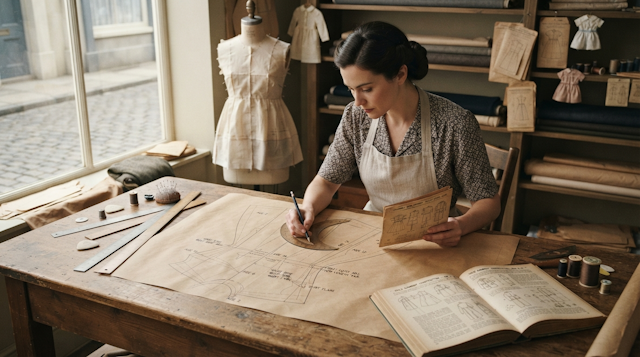
Drafting a girls’ dress bodice block for ages 2 to 12: anatomical transformations, dart manipulation, armhole depth calculations, and bodice balance.

Child body anatomy and pattern drafting: calculating dynamic ease allowances, growth allowances, and functional block patterns for active kids.

Engineering sleeve cap alignment with the armhole: ease allowance rules, 4 critical matching notches, and steam shaping to eliminate sleeve puffing and puckers.
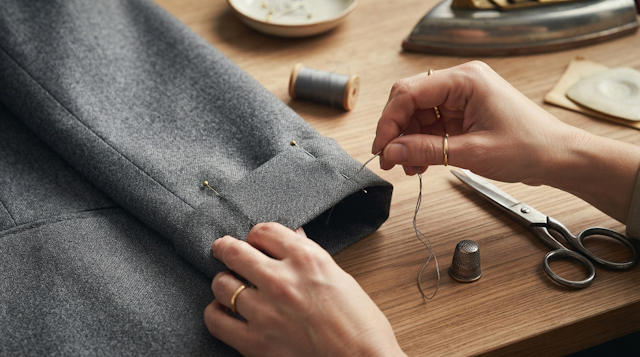
Professional garment and sleeve hemming techniques: double fold hem for light fabrics, blind hem stitch for coats and trousers, and narrow rolled hem for flared skirts.
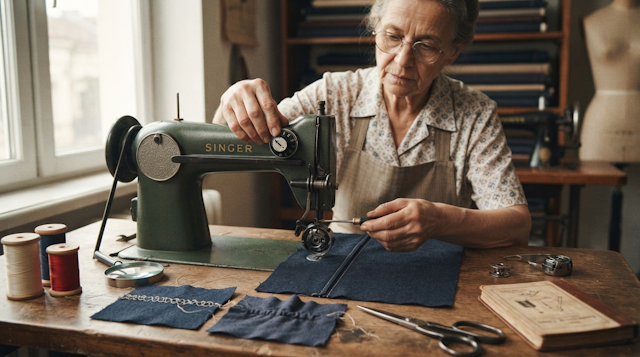
Step-by-step thread tension adjustment for sewing machines: diagnosing nesting underneath, resolving fabric puckering, bobbin case tuning, and test seam balancing.

Troubleshooting skipped stitches on domestic sewing machines: bent needle diagnostics, threading with presser foot up, hook clearance, and lint removal.
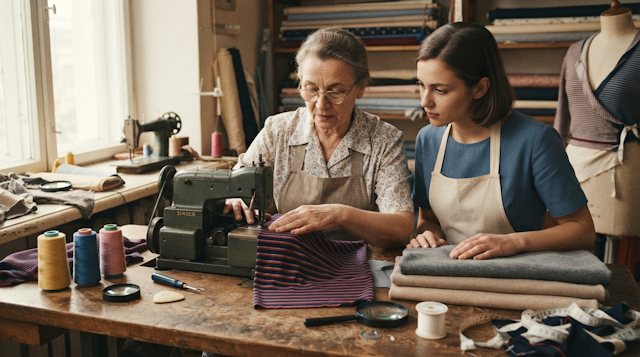
Mastering knit fabrics and activewear stretch: ballpoint vs. stretch needles, overlocker tension balancing, seam stabilization, and neckband ratios.