Autumn weather can be notoriously unpredictable: crisp and chilly in the morning, sunny at midday, and windy by the evening. Dressing a child under these conditions is a true art. That is why layering in children's wear has evolved from a stylish streetwear statement into an indispensable practical formula for active kids in transitional weather.
1. Why Layering Matters and How It Works
The secret of successful layering lies in balanced proportions: each succeeding garment must be slightly looser than the one beneath it, while fabrics harmonize in weight, drape, and texture:
- Superior Thermoregulation: Thin air cushions trapped between fabric layers retain warmth significantly better than a single bulky sweater. If a child overheats while running, removing an intermediate layer takes seconds.
- Rich Visual Texture: Blending contrasting tactile fabrics (ribbed cotton, structured denim, chunky knits, weatherproof shells) creates a sophisticated, dimensional editorial look.
- Effortless Adaptability: Core pieces from a child's capsule easily interchange to generate fresh, practical outfits every morning.
2. The 3-Tier Layering Formula for Optimal Comfort
To ensure total comfort across shifting temperatures, follow the classic three-tier system:
- Layer 1: Base (Breathable Skin-Contact Layer)
The foundation that rests directly against sensitive skin. It must be crafted from breathable, moisture-wicking natural textiles.
What to choose: cotton tees, ribbed long-sleeve tops, soft ribbed turtlenecks. - Layer 2: Insulating (Warmth-Retaining Mid Layer)
The middle tier responsible for locking in warmth without restricting mobility.
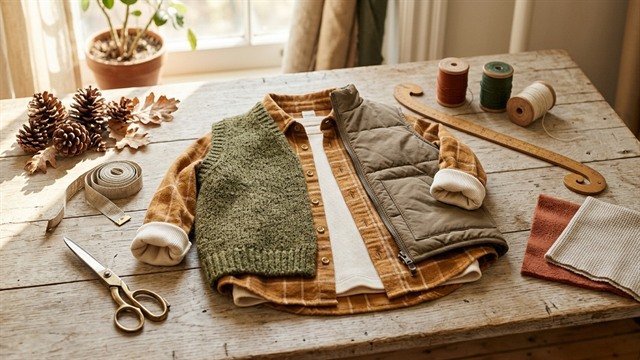
What to choose: cozy cotton fleece hoodies, relaxed sweatshirts, chunky knit cardigans, sweater vests, or flannel overshirts. - Layer 3: Protective (Weather-Resistant Outer Shell)
The shield against autumn winds, dampness, and drops in temperature. It must offer ample ease so it doesn't compress the middle layer.
What to choose: casual bomber jackets, windbreakers with membrane coatings, or insulated utility vests.
3. Inspiring Layered Outfit Ideas for Boys and Girls
Layering allows endless styling combinations for school and leisure:
- Smart-Casual School Set: Layer a textured V-neck knitted vest over a crisp button-down shirt, topped with a minimalist bomber jacket. Elegant, warm, and classroom-appropriate.
- Urban Hoodie and Denim Jacket Duo: Pair a brushed fleece hoodie over a cotton long-sleeve tee, topped with an oversized vintage-wash denim jacket with the hood resting over the collar.
- Layered Dress Look for Girls: A straight-cut knit midi dress worn with thick cotton tights, an elongated chunky cardigan, and a lightweight windbreaker.
When drafting layered children's clothing, chest ease allowances (Pg) are crucial. For the base layer (tees, long-sleeves), add 2–4 cm ease (or 0 cm for stretch ribbing). For the insulating mid layer (hoodies, cardigans), allow 8–12 cm ease and lower the armhole by 1.5–2 cm. For outer layers (bombers, jackets, vests), incorporate 14–18 cm ease with widened shoulders and sleeves to prevent bulkiness and allow natural mobility.
4. Why Sew Layered Wardrobes at Home?
Mass-market garments often clash in fit: sweater sleeves bunch tightly under coats, and stiff collars cause neck friction. Constructing garments with Vykroyka.com.ua digital patterns guarantees perfect harmony:
- Harmonious Proportions: Pattern ease allowances are designed to nest effortlessly without binding.
- Premium Natural Textiles: Select organic cotton fleece, soft waffle knits, and breathable membrane shells.
- Tailored Adjustments: Easily adjust sleeve and back lengths to match your child's specific growth curve.
Craft Cozy Layered Outfits with Precision Patterns!
Discover professional sewing patterns for long-sleeves, cardigans, vests, and jackets with comprehensive instructions on Vykroyka.
EXPLORE PATTERNS →
Apparel Industry Hub in Telegram
Community of garment manufacturers, tailors and designers. Daily fresh workshop vacancies, verified factories database and direct contacts.