
Production of Merch and Corporate Apparel: How to Work with B2B Clients and Tenders
How garment factories profit from manufacturing corporate merchandise and apparel: B2B client management, reference samples, embroidery vs printing...

Design secrets, leading global fashion trends, and the art of crafting immaculate looks
How garment factories profit from manufacturing corporate merchandise and apparel: B2B client management, reference samples, embroidery vs printing...

Comprehensive guide to Clo 3D in apparel manufacturing: virtual avatar fit simulation, fabric physics modeling, eliminating physical prototypes, an...

A practical blueprint for garment manufacturing automation: migrating from spreadsheets to apparel CRM/ERP, fabric barcode inventory tracking, and ...

A complete practical guide to digitizing paper sewing patterns: digitizer tables vs photo scanning, apparel CAD software selection, automated gradi...

A complete financial guide to apparel production economics: direct vs indirect overhead, labor minute-rate calculation, equipment depreciation, def...
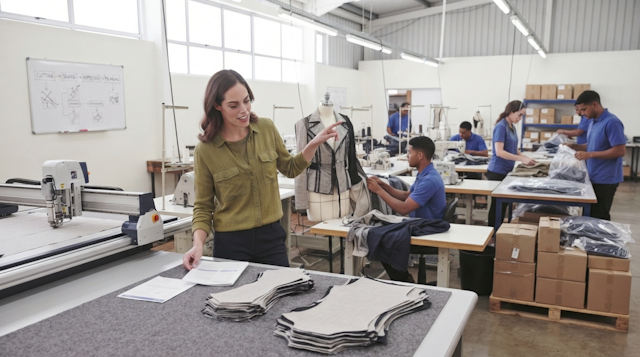
A complete operational guide to apparel production flow: cutting room optimization, assembly line balancing vs bundle methods, multi-tier QA, indus...

Overcoming the biggest hurdle in garment manufacturing: why seamstress shortages happen, piece-rate vs hybrid pay models, workplace ergonomics, and...

A practical guide to hiring and evaluating key apparel manufacturing talent: pattern makers, industrial mechanics, workshop leads, and sourcing cha...

A practical guide to fabric and trims procurement for garment brands: sourcing wholesale suppliers, batch quality inspection, shrinkage testing, an...

Practical guide to equipping an apparel workshop: basic machinery pack (lockstitch, sergers, pressing), new vs used machines, calculating ROI, and ...

A step-by-step practical guide to launching a sewing business from scratch: business models (D2C or B2B), startup budgeting, workshop requirements,...

Engineering pattern grading for children's apparel from size 80 to 140: growth increment rules, slice-and-spread method, and sleeve cap scaling.