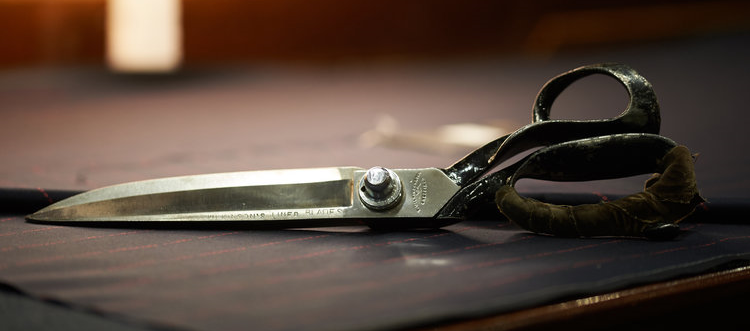
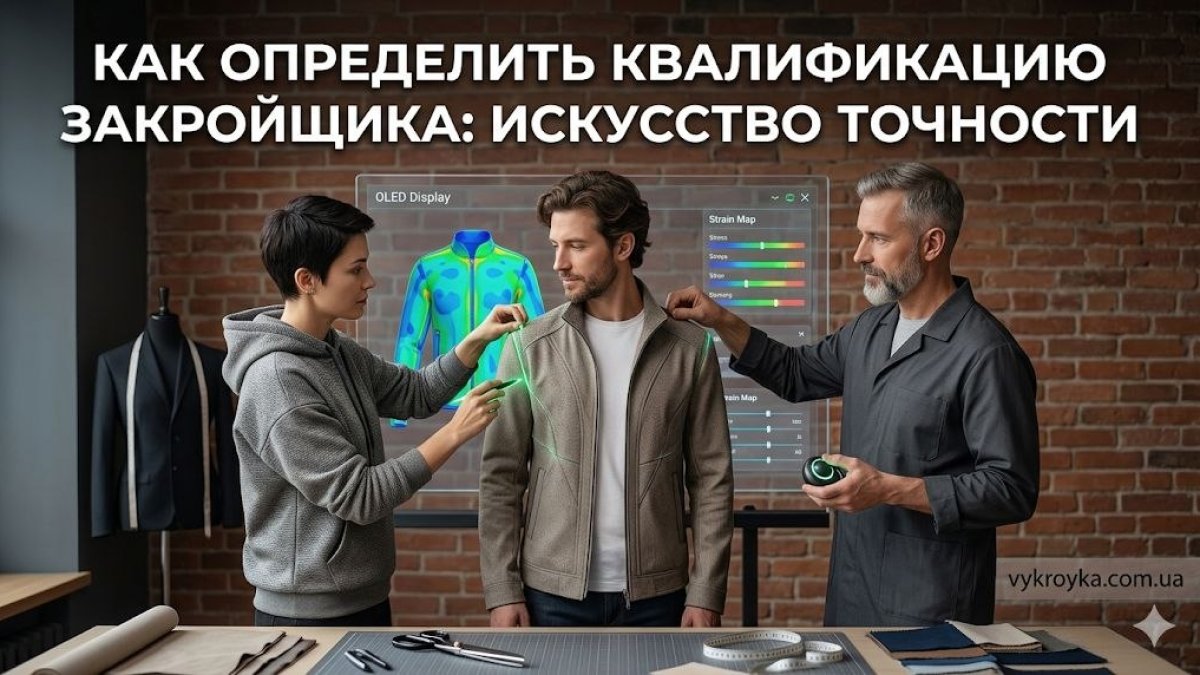
A cutter in a premium atelier and a custom tailoring studio is not just a cutter, but a leading designer-stylist who interacts directly with the client. The reputation of a fashion house depends on his ability to see the features of posture, accurately take anthropometric measurements and carry out flawless fittings. In this guide, we will examine the key criteria for the professionalism of an atelier cutter.
Contents of the manual
- 1. Anthropometric accuracy: balance measurements and taking into account body asymmetry
- 2. Knowledge of design methods (Muller, EMKO SEV, TsOTSHL)
- 3. Carrying out fittings: eliminating fit defects and oblique creases
- 4. Working with expensive delicate fabrics (silk, velvet, cashmere)
- 5. Psychology of communication with the customer and resolving controversial situations
- Advice to the owner of the studio: practical test task “Planting the layout”
- Frequently asked questions (FAQ)
1. Taking measurements and balancing the product
A highly qualified master takes not only basic girths, but also key balance measurements: length of front to waist (Ltp), length of back (Lts), chest height (Bg) and shoulder slope with fixation of right-left asymmetry.
2. Design methods
The cutter must be able to quickly build a basic foundation for a non-standard figure (kinked, stooped, with a protruding belly) and model a style of any complexity from a photo or sketch of the designer.
3. The art of fitting
A competent specialist eliminates the cause of the fit defect at the root (by pinching the shoulder or side seam), and does not try to “disguise” the crease with an iron.
4. Working with complex textiles
The cutter takes into account the direction of the pile on velvet and velor, combines a complex check at the seam joints and knows the rules of working with natural fur and leather.
Advice to the head of the studio
Ask the applicant to try on a mock-up of a calico jacket on a mannequin or model with a slouched posture. Real experience is immediately visible from the movements of the master’s hands and the speed of removing wrinkles on the back. And you can use exact ready-made bases from our catalog ready-made patterns.
Frequently asked questions (FAQ)
What is the difference between an atelier cutter and a factory cutter?
The atelier's cutter individually models the patterns according to the standards of a specific customer and conducts fittings. The factory cutter lays out the fabric and cuts out finished serial patterns in batches.
How many fittings should a professional cutter do?
For a dress or skirt - maximum 1 fitting; for a complex men's suit or coat - 2 fittings.
Expertly designed patterns are the key to a perfect fit of any product. To be the first to learn about the intricacies of design, modeling and trends in the sewing world, subscribe to our video channel Pattern - Ready-made patterns.