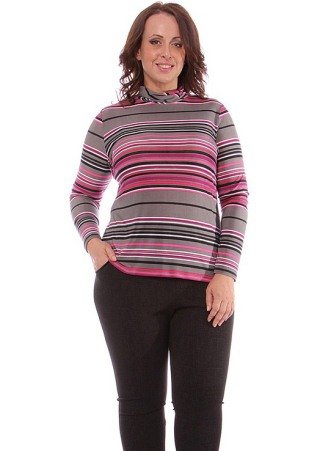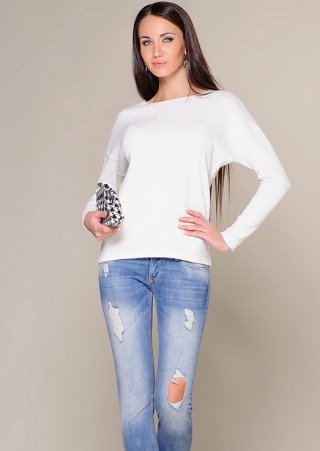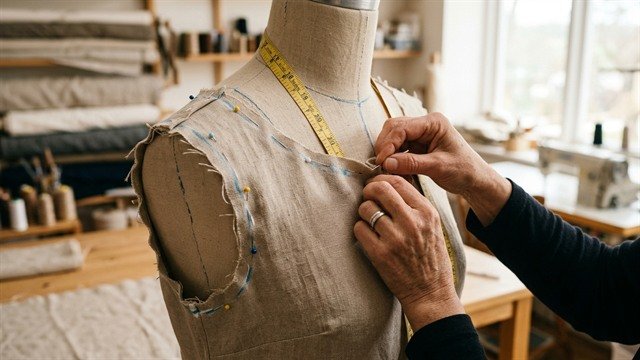
Trying on a dress, top or blouse is often marred by an unpleasant fit defect: along the neckline or armhole, the fabric begins to move away from the body, puff up or form empty “pockets”. The thing looks sloppy, and the straps of the underwear constantly strive to look out.
Why do the neckline and armholes lag behind the body and how to properly adjust the pattern to achieve a perfect fit? We analyze the main anatomical causes and step-by-step methods for correcting the defect.
Why do the neckline and armholes lag behind the body?
The main reason for this defect is the discrepancy between the geometry of the base pattern and the individual characteristics of the figure or the stretching of the sections during work:
- Stretching the cut during sewing: Thin fabrics, especially if they are cut using bias or semi-oblique thread, are very easy to stretch with a hot iron or foot while sewing. An unstrengthened cut instantly becomes deformed.
- Neckline/armhole too deep or wide:The basic pattern was designed for standard measurements, and your body shape (narrow shoulders, small chest or flat chest) requires a reduction in volume.
- Unaccounted for features of posture: Slouching or, conversely, crooked posture changes the tension of the tissue on the chest and back, which is why the cut ceases to fit tightly to the body.
Step-by-step instructions: how to correct a defect on the pattern and product
Method 1. Remove the excess into a hidden dart (for the neckline)
If the neckline is puffy in the front or on the back, the most reliable way is to transfer the excess fabric into a dart:
- Put the design or garment on inside out and pin the excess fabric around the edge of the neckline so that it fits snugly over the body.
- Measure the depth of the tuck and transfer this value to the paper pattern.
- On the pattern, make a cut from the neckline to the center of the chest dart (or back shoulder dart) and close this solution, transferring the volume to the main dart or soft gather.
Method 2. Adjusting the lagging armhole line
If the armhole puffs up (this happens especially often in sleeveless dresses, sundresses or vests):
- During the fitting, pin the excess fabric along the armhole line (usually it is concentrated on the shelf at the level of the bust).
- On the pattern, draw a new smooth line for the armhole, taking the excess volume into the side seam or transferring the tuck solution to the chest dart.
- Don’t forget to mirror-correct the length of the sleeve cap if the model requires a set-in sleeve.
Method 3. Mandatory stabilization of sections (prevention)
To prevent the neckline and armholes from becoming deformed during sewing and wearing:
- Retaining stitch:Always place a machine stabilizing stitch 2-3 mm from the edge of the cut (inside the allowance) immediately after cutting the parts.
- Adhesive edging: Use bias stitching adhesive tape (formband) or thin interlining to reinforce the curved edges of the neckline and armhole.
- Steam ironing: During the WTO process, gently iron the stretched section through the steam iron, returning the fibers to their original density.
Timely stabilization and precise correction of patterns guarantee the perfect fit of any dress or top according to your figure.
Follow new useful materials in the SHITTYA TA KRIY category on our portal vykroyka.com.ua!

Apparel Industry Hub in Telegram
Community of garment manufacturers, tailors and designers. Daily fresh workshop vacancies, verified factories database and direct contacts.