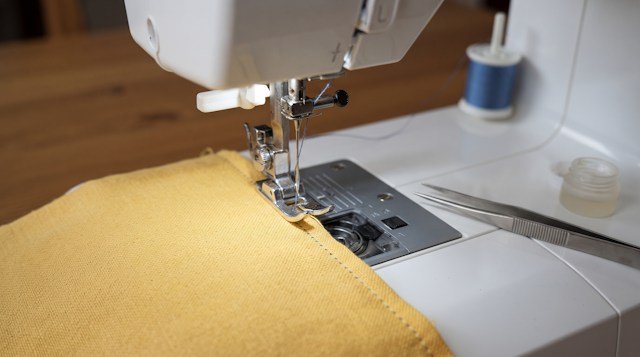
Skipped stitches are among the most frustrating and common mechanical hiccups in sewing. You are smoothly stitching a project when suddenly blank gaps appear along the seam line, leaving the seam structurally weak, puckered, and unattractive. Why does your machine suddenly start misbehaving, and how can you diagnose and resolve this issue yourself in just five minutes? Here are the top four culprits and their proven solutions.
1. Blunt, Bent, or Incorrectly Selected Needle
More than 75% of skipped stitch occurrences are rooted in the needle. Under operation, sewing machine needles endure intense dynamic stress, striking the fabric up to 1,000 times per minute:
- Microscopic point burrs: even an invisible bend or burr on the needle tip disrupts loop formation above the needle eye, causing the shuttle hook to miss the thread loop entirely. Always discard and replace old needles;
- Fabric mismatch: standard Universal needles are not engineered for knitwear, spandex, or scuba. Their sharp points pierce knit fibers, dragging the elastic cloth down into the needle plate hole. For knitwear, always switch to Jersey / Ballpoint or Super Stretch needles (featuring a specially modified scarf designed for foolproof hook capture);
- Correct installation: ensure the needle is pushed all the way up into the needle clamp with the flat side of the shank facing backward away from you.
2. Threading Errors and Tension Imbalances
When the upper or lower thread is routed incorrectly, proper loop formation fails:
- The Golden Threading Rule: always thread your upper spool with the presser foot raised up! When the foot is lowered, tension discs snap shut, preventing the thread from seating inside the tension mechanism;
- Bobbin and case: ensure the bobbin is wound evenly without loose loops. Check the rotation direction in top-loading horizontal hooks (typically the thread must unwind counter-clockwise, resembling the letter "P");
- Thread quality: avoid vintage cotton spools or uneven fuzzy bargain threads. Standardize on premium high-tenacity bonded polyester thread (Gutermann, Coats, Madeira).
Before adjusting mechanical settings, sew a test seam on two layers of scrap fabric using high-contrast threads: white on top and black in the bobbin. This visual test immediately exposes which thread is slipping or misbehaving.
3. Mismatch Between Needle Size and Thread Weight
Every needle size requires a calibrated thread weight to allow proper loop release:
- Heavy thread in a small needle: the thread cannot seat inside the front groove of the needle blade, causing friction and preventing loop formation;
- Light thread in an oversized needle: a heavy needle punches a gaping hole where fine thread drifts loosely, failing to form a predictable loop for the hook;
- Standard pairing: lightweight silks use size 65/9–75/11 with 50–60 wt thread; medium cottons use size 80/12–90/14 with 40 wt thread; heavy denims use size 100/16–110/18 with 30–40 wt heavy-duty thread.
4. Lint Buildup in the Bobbin Race & Shuttle Hook
As you sew, micro-fibers, lint, and dried oil accumulate inside the bobbin race. Eventually, this compressed lint impedes the smooth clearance of the thread loop around the hook:
- Unplug the machine and remove the needle and presser foot;
- Unscrew and remove the needle plate;
- Carefully lift out the black bobbin basket (in top-loading drop-in hooks) or disassemble the retaining ring (in front-loading oscillating hooks);
- Use a stiff cleaning brush to sweep away all compacted lint between the feed dogs and beneath the shuttle (never use wet wipes or canned air);
- Inspect the needle plate: if there are burrs or needle strike dings around the hole, smooth them with fine emery paper so they do not snag thread.
Sew with Joy Using Calibrated Sewing Patterns!
Browse our catalog of professional patterns complete with step-by-step sewing instructions for flawless results.
Browse Pattern Catalog