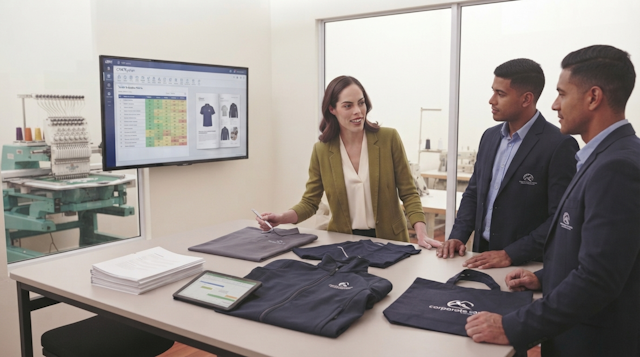
Once a sewing production unit establishes a stable operational workflow, the business owner faces a strategic decision: focus exclusively on proprietary apparel lines (D2C) or take on contract manufacturing for corporate clients (B2B)? Producing corporate merchandise, staff uniforms for hospitality, medical centers, or branded promotional wear can guarantee full production capacity for months ahead and provide predictable cash flow.
1. Pros and Cons of the B2B Segment
Before allocating factory capacity to corporate orders, evaluate the major advantages and potential risks of this business model:
Key Advantages:
- Large Batch Volumes: Orders often range from hundreds to thousands of units, allowing efficient cutting spreads, reduced fabric waste, and optimized sewing line throughput.
- Zero Retail Marketing Costs: Unlike consumer brands, contract manufacturing does not require ad budgets, model photoshoots, or retail customer support.
- Financial Predictability: Clear technical specifications, pre-approved budgets, and contractual advances (50–70%) secure stable working capital.
Operational Challenges:
- Strict Deadlines and Penalties: Corporate apparel is almost always tied to hard deadlines such as event dates, exhibitions, or venue launches. Delays can lead to substantial financial penalties.
- Stringent Quality Standards: Embroidery alignment, Pantone color fidelity, and print wash resistance must be flawless across the entire batch.
2. Development and Approval of Reference Samples
Working with corporate clients always begins with perfecting a signed reference sample rather than purchasing bulk fabric:
- Brand Guidelines Review: The client supplies their corporate identity guidelines, Pantone color codes, vector logos, and design preferences.
- Pattern Engineering: The pattern maker designs or customizes base blocks for practical workday ergonomics. To avoid engineering hoodies, tees, or polo shirts from scratch, manufacturers frequently rely on standard digital CAD blocks from the Vykroyka.com.ua patterns portal, tailoring them to client requirements.
- Sample Approval Protocol: The workshop sews a complete reference prototype with all logos applied. The client tests the fit and signs the approval sheet ("golden sample"), which stays in the shop as the quality benchmark for bulk inspection.
3. Branding Specifics: Embroidery vs Printing
Corporate clothing and merchandise are rarely plain. Mastering various branding techniques is critical for B2B success:
- Computerized Machine Embroidery: The most durable and premium branding method. Perfect for hoodies, polos, caps, aprons, and medical scrubs. Withstands rigorous industrial laundering.
- Screen Printing (Silkscreen): The industry standard for large runs (100+ units) of tees and sweatshirts, delivering the lowest unit cost and vibrant durability.
- DTF (Direct to Film) & Heat Transfer: Ideal for smaller batches, intricate multi-color emblems, or complex photographic gradients without setup fees for printing plates.
4. Entering Tenders and Sourcing B2B Clients
To establish continuous contract manufacturing pipelines, utilize proven acquisition channels:
- Procurement Platforms & Tenders: Regularly track government and commercial tenders for corporate uniforms and workwear. Carefully assess compliance standards, fabric certifications, and payment milestones.
- Agencies & Event Promoters: Creative and marketing agencies routinely source turnkey merchandise for enterprise clients. Offering them reliable deadlines and premium quality turns them into recurring revenue sources.
- Direct Outreach to Local Businesses: Restaurant chains, hotels, clinic networks, and logistics providers renew employee uniforms twice a year.
Merchandise and corporate apparel production provides dependable revenue diversification for garment factories. Rigorous adherence to client brandbooks, impeccable decoration quality, and punctual execution turn one-off projects into long-term commercial partnerships.
Looking for reliable base garment patterns for corporate contracts?
Explore our precision digital patterns for hoodies, polo shirts, and workwear to accelerate bulk production.
EXPLORE PATTERNS →