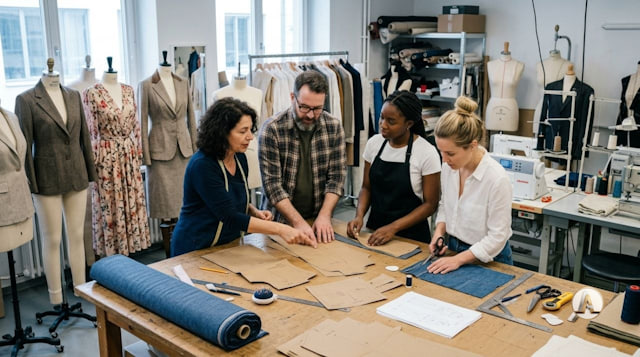
The precision of cutting parts of a garment is the foundation on which the speed of assembly in the flow and the impeccable fit of the finished garment are built. The choice between solid physical patterns made from electrocardboard (kraft cardboard) and digital vector patterns for CAD and plotters determines the productivity of the experimental workshop and the mass cutting area. In this article we analyze the advantages of each type of pattern.
Contents of the review
- 1. Electric cardboard patterns: density (0.5–1.0 mm), resource and ease of chalking
- 2. Digital patterns (DXF AAMA/ASTM, PDF, PLT): layout automation
- 3. Notches, control marks and cut tolerances (up to 0.5 mm)
- 4. Hybrid approach: printing patterns on a plotter and then duplicating them into craft
- Technologist's advice: how to protect sections of cardboard patterns from abrasion
- Frequently asked questions (FAQ)
1. Advantages of cardboard patterns
Electrocardboard patterns with a thickness of 0.5–0.8 mm are indispensable for manual chalking of individual products, trimming waste and the work of furriers. The hard edge allows you to quickly trace the outline with tailor's chalk or gel pen without moving the paper.
2. Digital vector CAD formats
Digital pattern databases in DXF-AAMA, PLT and PDF formats allow for automatic layout with minimization of inter-pattern fabric dropouts up to 85–92% of the fabric's efficiency.
3. Accuracy of notches
In digital patterns, control notches (4–5 mm deep) are set with mathematical precision, guaranteeing perfect alignment of control points on the overlocker without displacing the layers of fabric.
Advice for a technologist
To extend the service life of cardboard patterns of basic models, glue their outline with transparent narrow tape or treat the edge with quick-drying varnish. And you can order the development of digital and cardboard patterns in the catalog ready-made patterns.
Frequently asked questions (FAQ)
Which cardboard is best to use for working patterns?
Electric cardboard brand EV with a density of 300–450 g/m² with moisture-resistant impregnation.
At what scale should plotter layouts be printed?
Strictly 1:1 in vector mode (without rasterization) on paper with a density of 80 g/m².
Professional patterns are the key to profitability of any sewing business. Subscribe to our video channel Pattern - Ready-made patterns.

Apparel Industry Hub in Telegram
Community of garment manufacturers, tailors and designers. Daily fresh workshop vacancies, verified factories database and direct contacts.