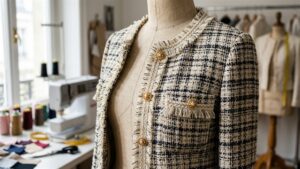

Many emerging fashion designers discover that a stunning sketch on paper or an inspiring Pinterest moodboard often resists straightforward translation into a wearable garment. The gap between artistic vision and technical execution remains the primary bottleneck for new apparel brands. At the sewing portal vykroyka.com.ua, we examine the step-by-step roadmap for developing a commercial fashion collection: from initial concept and moodboard to factory-ready production pattern sets.
- 1. Concept Phase: Moodboard, Target Market, and Tech Brief
- 2. Technical Flats and Fabric Sourcing
- 3. Pattern Drafting and Block Manipulation
- 4. Muslin Prototyping and First Fitting
- 5. Pattern Grading and Production Documentation
- 6. Comprehensive Collection Development Matrix
- 7. Head Patternmaker's Professional Advice
- 8. Conclusion and Next Steps
1. Concept Phase: Moodboard, Target Market, and Tech Brief
Before buying fabric rolls and scissors, structure your product concept methodically:
- Moodboard: Build a visual anchor. Consolidate a tightly curated color story (4–5 primary shades), textile swatches, historical references, and silhouette themes. The moodboard keeps your design language coherent throughout sampling.
- Target Audience Analysis: Define who wears these garments, where, and why. Ergonomic expectations, ease of movement, and hardware vary drastically between tailoring, eveningwear, and loungewear.
- Design Brief: Outline your capsule wardrobe lineup (e.g., tailored trench, palazzo trousers, silk camisole, ribbed turtleneck) ensuring high styling interchangeability.
2. Technical Flats and Fabric Sourcing
While fashion illustrations convey mood, production relies on rigorous technical flats:
- Technical Flats: Draft black-and-white 2D vector flats front and back, clearly detailing dart placement, seam allowances, closures, pocket bags, and topstitching.
- Textile Sourcing: Select shell fabrics, linings, fusibles, and trims. Fabric characteristics—drape, elasticity, shrinkage, and weight—govern the required pattern silhouette. Dense cotton holds architectural structure, whereas silk behaves fluidly.
3. Pattern Drafting and Block Manipulation
Once flats are approved, pattern drafting transforms ideas into engineering schematics:
- Base Block Drafting: The patternmaker drafts fundamental blocks (bodice, sleeve, skirt, trousers) matching standard sizing specs or custom measurements. Learn our methods in "How to Draft a Basic Bodice Block".
- Pattern Manipulation: Rotate darts into style lines, add gathers, design collars, and engineer sleeve volume. See also our guide on full bust and narrow shoulder pattern alterations.
4. Muslin Prototyping and First Fitting
Never cut the experimental prototype directly from expensive collection fabric:
- Muslin Sample (Toile): Cut and stitch the design from affordable calico or cotton muslin with raw edge seams.
- Fitting on Model & Form: Verify horizontal and vertical balance lines, armhole depth, neck drop, and movement ease.
- Pin Alterations: Mark changes directly on the muslin, then transfer alterations into CAD master patterns.
- Pressing Review: Inspect seam quality after steam pressing as outlined in "Pressing in Sewing: Secrets of Professional Ironing".
5. Pattern Grading and Production Documentation
The bridge between individual samples and commercial manufacturing:
- Pattern Grading: Proportional scaling of approved baseline size (e.g., size M) across your complete size chart (XS–XXL). Review our tutorial "Pattern Grading by Sizes: How to Scale Patterns".
- Digitizing & Plotter Markers: Digitize paper patterns into PDF, DXF, or PLT for CNC cutting tables. Read "How to Digitize Paper Patterns for Wide-Format Plotters".
- Tech Pack: Construct full specification sheets: cut lists, fabric consumption markers, seam codes, stitch SPI, and assembly sequences.
6. Comprehensive Collection Development Matrix
| Development Stage | Deliverable | Quality Milestone |
|---|---|---|
| 1. Concept & Moodboard | Palette swatches, capsule brief | Full capsule interchangeability |
| 2. Technical Flats | 2D specification drawings | Clear closures, pockets, seam lines |
| 3. Master Drafting | Sloper blocks and style patterns | Accurate wearing ease allowances |
| 4. Muslin Fitting | Stitched toile sample | Flawless balance lines and drape |
| 5. Grading & CAD | Full size range pattern nests | Matching seam lengths across sizes |
| 6. Production Tech Pack | Cutting layout, tech spec, BOM | Turnkey manufacturing clarity |
Never grade a pattern before the sample fit is 100% locked! Grading scales existing balance flaws across every size tier. Perfecting your baseline prototype protects fabric yield and guarantees production consistency.
7. Head Patternmaker's Professional Advice
- Pre-shrink Textiles: Always preshrink test yardage to calculate accurate shrink percentages before drafting production allowances.
- Standardize Construction: Maintain consistent cuff, collar, and zipper assemblies across styles to streamline production efficiency and reduce manufacturing costs.
Professional Digital Patterns for Your Collection
Accelerate your collection launch with Vykroyka's library of professionally engineered digital sewing patterns, complete with plotter and home-print layouts.
Explore Pattern Library →8. Conclusion and Next Steps
Launching a fashion line merges creative passion with exacting technical precision. A focused moodboard, precise flats, muslin samples, and production-grade patterns turn ideas into a thriving commercial brand. Discover more design resources and digital patterns at vykroyka.com.ua.