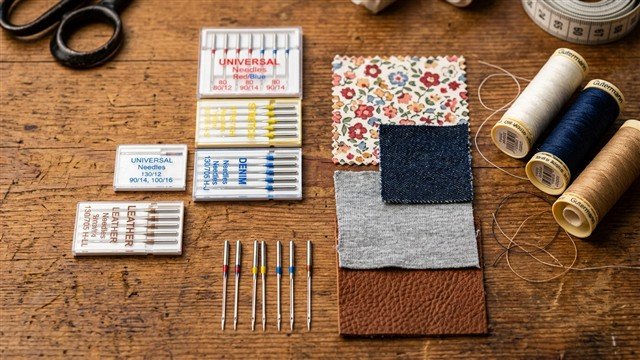
Many beginner sewists make a common mistake: using the single generic needle that came with their machine for every project. This inevitably results in skipped stitches, broken threads, unsightly fabric snags, and even needle bar damage.
Selecting the right needle accounts for more than 50% of achieving clean, strong, and professional stitches. How do you decode needle numbering and match needle types to fabrics? Here is our comprehensive guide.
Anatomy of a Sewing Machine Needle: Demystifying Numbers
On household 130/705 H needle packaging, you will notice two numbers separated by a slash (e.g., 80/12, 90/14, or 100/16):
- First Number (European Metric System NM): Indicates the shaft diameter in hundredths of a millimeter (ranging from 60 to 120). For example, size 80 is 0.80 mm thick, while size 100 is 1.00 mm thick. Use smaller numbers for delicate, lightweight fabrics.
- Second Number (American Singer System): Ranges from 8 to 19. Metric sizing remains the primary global standard for modern tailors.
Major Needle Types and Fabric Compatibility
1. Universal Needles (H)
Features a slightly rounded point suitable for most woven fabrics without tearing warp and weft threads.
Best for: Cotton, linen, poplin, percale, wool blends, and lightweight suiting. Sizes: 70/10 to 110/18.
2. Stretch & Jersey Needles (H-S / H-J)
Designed with a medium ball point tip that pushes knit fibers aside instead of cutting them, preventing ladder runs, skipped stitches, and holes along stretch seams.
Best for: Single jersey, French terry, rib knit, fleece, swimwear biflex, and spandex. Sizes: 75/11 and 90/14.
3. Jeans / Denim Needles (H-J)
Constructed with a reinforced, extra-rigid shank and an acute point to penetrate dense woven layers without deflecting or snapping.
Best for: Denim, canvas, heavy twill, and workwear fabrics. Sizes: 90/14 to 110/18.
4. Leather Needles (H-LL)
Engineered with a specialized wedge/cutting blade tip that slices cleanly into genuine leather at a 45-degree angle for consistent seam alignment.
Best for: Genuine leather, suede, nubuck, and heavy faux leather. Sizes: 90/14 to 110/18. (Caution: Never use leather needles on woven fabrics or knits, as they create permanent cuts in the weave).
Needle, Fabric, and Thread Reference Chart
| Fabric Type | Needle Type | Needle Size (NM / US) | Recommended Thread |
|---|---|---|---|
| Chiffon, silk, organza, lawn | Microtex / Universal | 60/8 – 70/10 | Fine Polyester #120–150 |
| Cotton, linen, poplin, quilting | Universal | 75/11 – 80/12 | All-Purpose Polyester #100–120 |
| Jersey, French terry, rib knit | Stretch / Jersey | 75/11 – 90/14 | Flexible Polyester #100–120 |
| Denim, heavy canvas, corduroy | Jeans / Denim | 90/14 – 110/18 | Heavy Duty Core-Spun #40–80 |
| Natural leather, thick suede | Leather | 90/14 – 110/18 | Extra-Strong Bonded #30–50 |
Essential Rules for Needle Maintenance
- Lifespan: A standard home sewing machine needle lasts approximately 8–10 hours of active sewing. If your machine skips stitches, makes a dull knocking sound, or snags fabric, replace the needle immediately.
- Thread-to-Groove Fit: The sewing thread should nest comfortably within the needle’s front groove without binding or bulging.
Explore more technical sewing tutorials, fabric guides, and pattern masterclasses on vykroyka.com.ua!