A sudden loud knocking, clicking, or grinding metallic noise coming from your sewing machine is a warning sign that should never be ignored. Unusual sounds not only disrupt sewing flow but can also signal severe mechanical strain on the shuttle hook mechanism and needle bar.
Why does a sewing machine start knocking, and how can you restore its smooth, quiet operation? Here are the 4 most common causes and how to fix them quickly.
1. Bent, Dull, or Improperly Inserted Needle
The most frequent and easily fixable cause of loud clicking is a bent needle hitting the edges of the throat plate, presser foot, or hook mechanism.
How to Fix:
Turn off the machine, remove the needle, and place its flat shank side on a completely flat glass surface. If the shaft has even a tiny bend or was not pushed all the way up into the needle clamp, it will strike metal with every stroke. Always replace a compromised needle with a fresh, high-quality needle suited for your fabric.
2. Lint Buildup and Dry Shuttle Hook Race
When lint, dust, and clipped thread accumulate inside the bobbin race while lubricant dries out, metal parts grind against each other without cushioning. This produces noticeable vibration and a loud knocking noise.
What to Do:
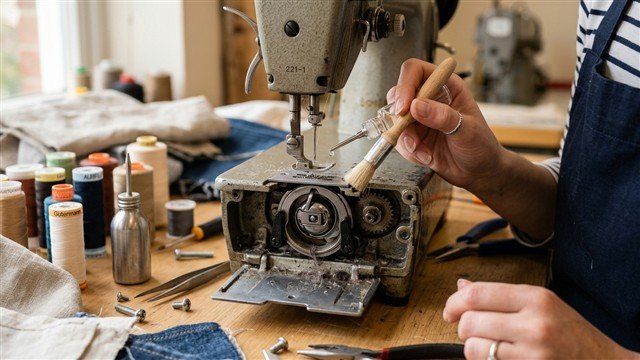
- Remove the throat plate, take out the bobbin case, and thoroughly clear lint using a small brush or lint wipe.
- Apply 1–2 tiny drops of specialized sewing machine oil to the rotating hook race (refer to your machine’s user manual).
- Sew a few test stitches on scrap fabric to distribute oil and wipe away any excess.
3. Loose Screws and Mechanical Play
Motor vibration over time can loosen fastening screws on the needle plate, presser foot holder, or internal gears.
Solution: Use a screwdriver to securely tighten the throat plate screws, foot clamp, and needle bar thumb screw. If there is noticeable play in the handwheel or internal gears, have a professional sewing technician adjust the clearances.
4. Wrong, Damaged, or Chipped Bobbins
If a bobbin has chipped edges, cracks, or does not match the exact height and curvature required by your machine model, it will rattle and bounce inside the bobbin case during high-speed sewing.
Solution: Use only authentic bobbins specified by your sewing machine manufacturer and ensure smooth, even thread winding.
Discover more practical sewing tutorials and machinery maintenance guides on vykroyka.com.ua!