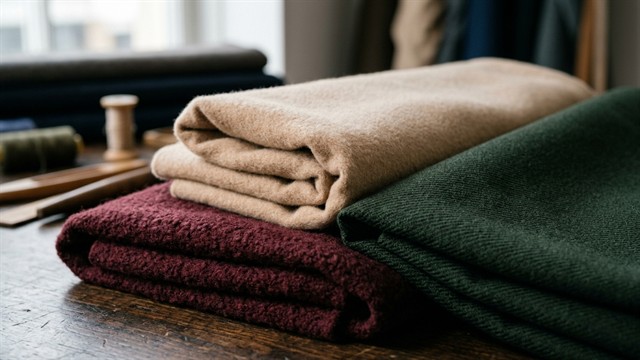
The choice of coat fabric is an important stage, on which the external elegance, durability and warming properties of the future product directly depend. Broadcloth, felted wool and cashmere require different approaches to design, WTO and subsequent care, so it is important to understand the features of each material at the stage of pattern selection.
Contents of the article
Cashmere: uncompromising luxury and softness
Cashmere is a noble material made from the undercoat of high mountain goats. It has an unsurpassed light structure, a delicate silky shine and high thermal insulation properties.
- Advantages: Weightless, soft, status appearance.
- Features of work: Requires delicate wet-heat treatment (WHT) and mandatory backup gasket to prevent stretching of seams.
- For which styles it is suitable: Robe coats with a soft belt, classic midi models with a shawl collar.
Felted wool (loden): plasticity and texture
Loden is a dense woolen fabric that has gone through a felting process. Its structure resembles thin felt with an expressive texture.
Due to its high plasticity, felted wool does not fray when cut and is perfectly shaped during wet-heat treatment, allowing you to create soft falling folds and volumes without unnecessary rigidity.
Coat cloth: monumental dimensional stability
Cloth is a classic dense material with a smooth or slightly brushed surface. The fabric has a high density and holds its shape perfectly.
- Weather protection:Resistant to wind and does not get wet for a long time in drizzling rain.
- Form stability:Ideal for coats with a complex architectural cut and clear geometry of the shoulder girdle.
- Wear resistance:Resistant to abrasion and pilling.
Rules for caring for a wool coat
To ensure that outerwear made from natural wool retains its impeccable appearance for years, regularly clean the fabric with a soft clothes brush in the direction of the pile. For cashmere and cloth, dry cleaning is recommended, and small creases should be removed with a vertical steamer without the sole of the iron coming into contact with the fabric.
Tailor's advice
Before cutting a coat made of wool or cashmere, be sure todecate the fabric with dry steam, ironing the fabric through an iron from the wrong side in the direction of the pile. Avoid pressing hard so as not to “crush” the pile. Professional ready-made patterns from our catalog will help you accurately calculate the fabric consumption and the allowance for a loose fit.
Frequently asked questions (FAQ)
Is it possible to wash a coat made of felted wool (loden) at home?
Products made from natural loden are not recommended to be washed in a machine, as the fabric will shrink significantly. Only dry cleaning or delicate local treatment is acceptable.
How to prevent cashmere from pilling in friction areas?
Choose cashmere with a long-staple wool blend (10-20%) and avoid bag straps constantly rubbing against the same area of your coat.
Which fabric is best for your first DIY coat?
Loden (felted wool) is ideal for beginners: it forgives minor sewing errors, is easy to iron and does not fray on cuts.
Expertly designed patterns are the key to a perfect fit of any product. To be the first to learn about the intricacies of design, modeling and trends in the sewing world, subscribe to our video channel Pattern - Ready-made patterns.
Portal Textil en Telegram
Comunidad de fabricantes textiles, modistas y diseñadores. Vacantes diarias en talleres, fábricas verificadas y contactos directos.