The clothing industry is rapidly evolving towards digitalization and robotization: automatic CNC cutting systems, sewing machines for assembling pockets into frames, programmable cyclic machines and automatic spreading carriages are radically changing the cost per unit of product. However, no robot can replace the tactile sense and experience of a designer-tailor when working with capricious natural fabrics. In this article, we explore the ideal balance of automation and human skill.
Contents of the analytical article
- 1. Where automation is indispensable: deck cutting, programmable hinges and pocket machines
- 2. The indispensable role of the master: landing on a non-standard figure, WTO and manual assembly of knots
- 3. Economics of implementation: calculating the payback period of automatic equipment
- 4. Quality control: standardization of operations and elimination of the human factor
- Advice to the production owner: phased modernization of the workshop without cash gaps
- Frequently asked questions (FAQ)
1. Advantages of sewing machines
An automatic pocket machine makes a welt pocket with a leaflet in 18 seconds with a positioning accuracy of up to 0.1 mm, while a skilled seamstress spends 8-10 minutes on this operation.
2. Where humans are superior to machines
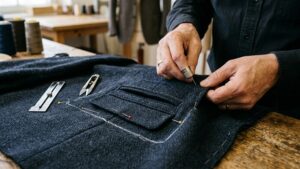
The master is indispensable for individual fitting of patterns, working with silk, velvet, natural leather, as well as for performing wet-heat treatment (tatting, pulling) that forms the sculptural chest of a man's jacket.
3. Hybrid production model
The most efficient garment factories combine CAD design and CNC cutting with hand finishing of complex components by experienced tailors.
Advice to the manager
Start automation not with complex robots, but with basic devices: needle positioners, automatic thread trimmers, spring-loaded feet and high-quality patterns. And you can download verified patterns for continuous production in the catalog ready-made patterns.
Frequently asked questions (FAQ)
What batch size justifies the purchase of a sewing machine?
From 1000 units of the same type of products per month (for example, classic trousers, shirts, workwear).
Does automation reduce fabric waste?
Yes, automatic laying and cutting reduces waste by 5-8% compared to manual chalking.
Perfect tailoring starts with perfect patterns. Subscribe to our video channel Pattern - Ready-made patterns.

Portal Textil en Telegram
Comunidad de fabricantes textiles, modistas y diseñadores. Vacantes diarias en talleres, fábricas verificadas y contactos directos.