Working with knitwear and elastic fabrics requires special equipment that can stretch with the fabric without breaking the threads. Overlocker, coverstitch machine and carpet locker often cause confusion among novice craftsmen. In this article we will analyze in detail what the fundamental difference between these devices is, how 3, 4 and 5-thread seams differ, and what equipment is really necessary for a home or professional studio.
Contents of the article
- What is the difference between an overlocker, an overlocker and a coverlock
- Seam anatomy: 3-thread, 4-thread and 5-thread overlock stitch
- Flat (cover) stitch: what is it for and how is it done
- Do you need a carpet lock: all the pros and cons of hybrid technology
- Comparative table of sewing equipment for knitwear
- Tailor's advice: which equipment configuration to choose for starting
- Frequently asked questions (FAQ)
What is the difference between an overlocker, a cover stitcher and a carpetlocker?
Each sewing device performs its own unique task and cannot be completely replaced by another:
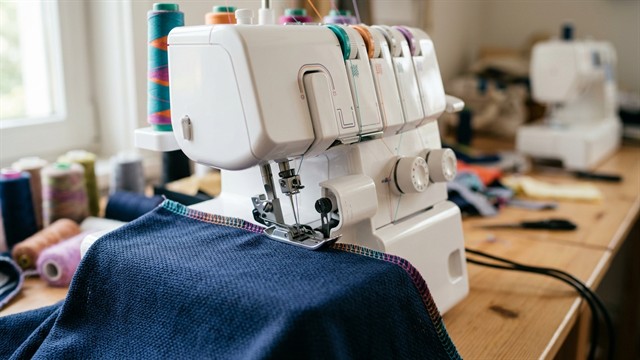
- Overlock: Sews together pieces using an elastic chain stitch, while trimming away excess seam allowances and overcasting edges to prevent the fabric from fraying.
- Covering machine (flat stitch): Creates an elastic flat chain stitch on the front side (two or three parallel lines) and interlacing threads on the back. Used for hemming the bottom of T-shirts, sleeves and sewing on elastic bands.
- Coverlock:2-in-1 hybrid. It combines the functions of an overlocker and a cover stitching machine, but requires reconfiguring the loopers and needle plates when changing operations.
Anatomy of seams: 3-thread, 4-thread and 5-thread overlock stitch
The number of threads in an overlocker determines the strength, elasticity and purpose of the stitch.
- 3-thread stitch:Performed with one needle and two loopers. Used for overcasting sections of non-flowing fabrics, decorative roller seams (narrow overlock stitch for processing flounces and scarves) and stitching light fabrics.
- 4-thread stitch:Performed with two needles and two loopers. This is the main stitching stitch for knitwear (footer, hoodie, ribbed). It simultaneously connects parts and holds tension securely.
- 5-thread stitch (combined):Combines a 3-thread overlock stitch and a 2-thread chain stitch. Used on heavy coat fabrics and in the denim industry for heavy-duty stitching of parts in one pass.
- Rolled seam:A narrow, frequent edge tack, in which the cut is tucked inward. Indispensable for processing light, flowing chiffon skirts and scarves.
Flat (cover) seam: what is it for and how is it done
A true flat seam cannot be achieved with a regular overlocker. The cover stitch machine operates without a trimming knife and produces a chain stitch stitch.
On the front side, two or three parallel straight lines are visible, and on the back side there is a complex loop-like weave that stretches along with the knitwear. The main purpose is to hem the bottom of knitwear, imitate sports covered seams, and attach braid and cuffs.
Do you need a carpet lock: all the pros and cons of hybrid technology
Many beginners think that buying one carpet locker will solve all problems. However, this technique has its own specifics.
Pros: Saving space on your desktop and buying one device instead of two.
Disadvantages: The main disadvantage is the labor-intensive reconfiguration process. To turn an overlocker into a cover stitching machine, you need to remove the knife, change the needle plate, rearrange the needles and completely feed the threads through a complex looper system. In practice, frequent mode changes take a lot of time.
Comparison table of sewing equipment for knitwear
| Equipment type | Availability of a knife | Basic functions | Difficulty in threading |
|---|---|---|---|
| 4 thread overlock | Yes (cropped section) | Stitching and overcasting knitwear, rolled seam | Medium (4 coils, color coded) |
| Coverstitching machine | No (no trimming) | Flat seam, hem, trim | Medium (3-4 bobbins, chain stitch looper) |
| Coverlock (hybrid) | Yes (removable knife) | All functions of an overlocker and a cover stitching machine | High (difficult reconfiguration of nodes) |
Tailor's advice
If you are just starting to sew knitwear,it is better to buy two separate machines(even a basic inexpensive overlocker and a separate cover stitching machine). Constantly reconfiguring the carpet from overlock mode to flat stitch mode quickly tires and discourages sewing. And proven ready-made patterns from our catalog will help you sew products with an ideal knitted cut.
Frequently asked questions (FAQ)
Is it possible to do without a cover machine when sewing knitwear?
Yes, you can. Instead of using a cover stitch to hem the bottom of T-shirts and sweatshirts, you can use an elastic zigzag stitch, a double needle on a regular sewing machine, or hem the hem using jersey tape/elastic tape.
How does a 4-thread overlock differ from a 3-thread overlock?
A 4-thread overlock stitches parts simultaneously with two needles and overcasts edges, forming a strong elastic seam. The 3-thread stitch is used mainly for overcasting finished cuts or seaming thin fabrics, as it is less tensile.
Do you need differential fabric feed in an overlocker?
Yes, a differential conveyor is a required feature. It allows you to fit stretchable knitwear (so that the edge does not ripple) or, conversely, to slightly stretch the fabric during processing.
Expertly designed patterns are the key to a perfect fit of any product. To be the first to learn about the intricacies of design, modeling and trends in the sewing world, subscribe to our video channel Pattern - Ready-made patterns.