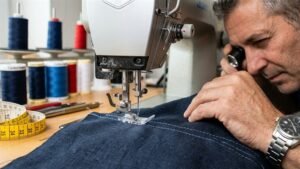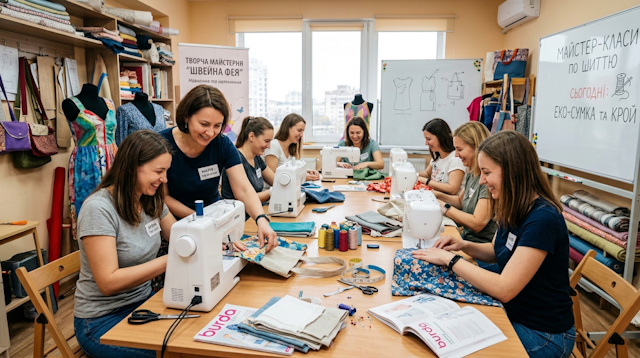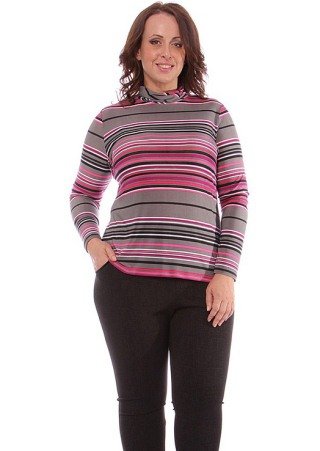
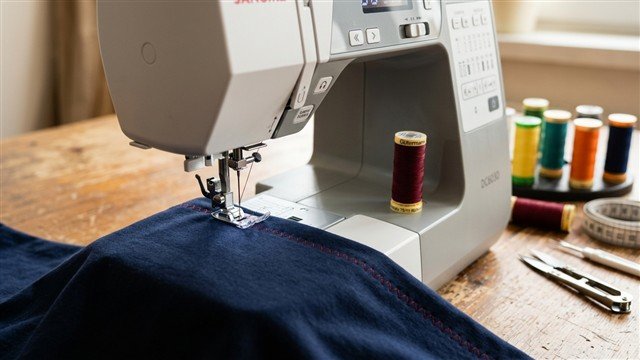
Many beginners believe that sewing knit fabrics requires an expensive serger (overlocker) and coverstitch machine. While specialized equipment speeds up production, you can easily sew high-quality T-shirts, long-sleeves, and cozy loungewear on a standard domestic sewing machine by mastering a few essential technical secrets.
How do you properly configure a standard sewing machine for stretch jersey and knits, and which stitch settings ensure seam elasticity without popping or waving? Here is our comprehensive guide.
Essential Rules for Machine and Fabric Setup
1. The Right Needle: Protecting Knit Fibers
Standard sharp universal needles punch through and sever delicate knit yarns. Consequently, after the first wear or wash, tiny holes and runs appear along the seam line.
The Solution: Always use specialized needles marked Stretch or Jersey (Ball Point). Their rounded tips gently push knit loops aside instead of cutting them, preventing skipped stitches and fiber damage.
2. Selecting Strong, Elastic Thread
Never use vintage cotton thread on stretchy fabrics — it lacks flexibility and snaps under tension. Opt for smooth, premium 100% all-purpose polyester thread for both the needle and the bobbin.
Which Stitches to Use Instead of a Serger?
If your machine lacks dedicated overlock stitches, these reliable options provide durability and stretch:
- Narrow Zigzag: The universal favorite for knits. Set a narrow width (0.5–1.0 mm) and standard length (2.0–2.5 mm). Visually it mimics a straight stitch, yet stretches comfortably with the fabric.
- Stretch Triple Stitch (Reinforced Straight Stitch): The machine sews two steps forward and one step back. This creates an exceptionally strong, elastic seam ideal for armholes, shoulders, and crotch seams.
- Mock Overlock Stitch: Most modern sewing machines include an open or closed overedge stitch. Pair it with an overcasting foot (with a wire guide) to keep raw fabric edges flat without curling.
How to Prevent Wavy, Stretched Seams
- Adjust Presser Foot Pressure: If your machine has a pressure dial, reduce the tension. Heavy pressure pushes the top fabric layer faster than the bottom, causing waves.
- Use Stabilizers: On thin jersey or neckline bindings, support seams with wash-away water-soluble stabilizer or lightweight fusible stay tape.
- Let the Feed Dogs Work: Never pull or stretch knit fabric by hand while sewing. Let the feed dogs advance the fabric smoothly at its natural pace.
Explore more professional sewing guides, masterclasses, and patterns on our portal vykroyka.com.ua!