High-quality edge finishing on the inside of a garment is the primary hallmark of professional sewing craftsmanship. Leaving raw fabric edges unfinished leads to fraying after the very first wash, distorting seam allowances and degrading the internal aesthetics. We explore classic and reliable methods to protect fabric edges neatly, using both specialized sergers and standard household sewing machines.
Masterclass Contents:
1. Serger Edge Finishing (3- and 4-Thread Stitches)
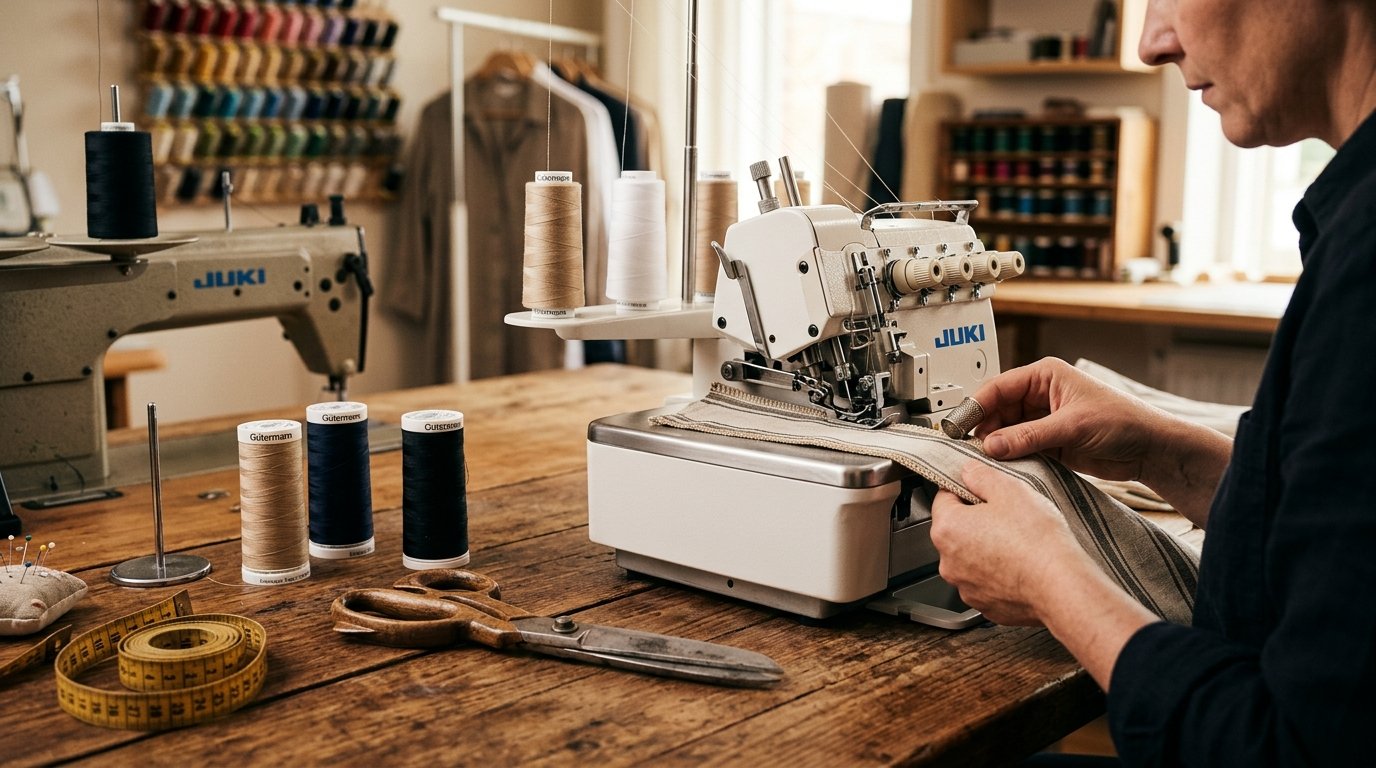
Using an overlock serger is the fastest, most durable, and truly factory-grade method for securing fraying fabric edges. Unlike a standard sewing machine, a serger features integrated trimming blades that cut excess seam allowances cleanly along the stitch line, forming a neat interlocking loop chain.
Technique:
- Threading and Tension: Thread the serger with durable, fine polyester threads (№120–150). Calibrate looper tensions so the stitch rests flat without pulling the edge into a bulky roll or leaving loose thread loops.
- Differential Feed Adjustment: Adjust the differential feed according to fabric elasticity (preventing knitted textiles from stretching into ripples and fine cottons from puckering).
- Stitch Selection: A 4-thread overlock simultaneously seams and finishes edges (essential for knitwear, hoodies, and t-shirts), while a 3-thread overlock is designed exclusively for clean edge finishing on woven tailored garments.
2. Mock Overlock Stitch on a Standard Sewing Machine
If you do not own a serger, modern home sewing machines produce impressive edge-finishing results via built-in overcast and stretch stitch utility programs.
Technique:
- Program Selection: Choose a dedicated overcasting stitch on your machine menu (typically indicated by an icon showing diagonal loops over a straight baseline).
- Overcast Foot with Wire Guide: Install an overcasting presser foot (type G or C). It features a small wire or pin around which the stitch forms, preventing the raw edge from curling or bunching under thread tension.
- Fabric Guiding: Align the seam allowance so the needle drops into open air just beyond the fabric edge on the right swing, wrapping the raw edge securely.
3. Classic Zigzag Edge Finish
A time-tested, versatile, and accessible technique available on every domestic sewing machine, including vintage mechanical units.
Technique:
- Stitch Parameters: Set zigzag width to 2.5–3.5 mm and stitch length to 1.5–2 mm. For loosely woven fabrics (linen, tweed), increase width up to 4 mm.
- Needle Trajectory: Stitch so that the left needle penetration pierces the seam allowance, while the right penetration enters air just off the edge.
- Tension Management: Use fine threads and slightly loosen upper thread tension to prevent tunneling. Press allowances thoroughly with moderate steam afterward.
When starting edge stitches on lightweight or slippery fabrics, the machine can pull the raw corner into the needle plate hole. To prevent this, pull thread tails back by 10–12 cm before sewing and hold them under gentle tension during the first 3–4 stitches. You can also place a tiny piece of tear-away tissue paper or water-soluble stabilizer under the corner.
4. Narrow Rolled Hem (Moscow Seam) for Delicate Fabrics
The narrow double-turned hem (commonly known as the Moscow hem) is the gold standard for high-end edge finishing on sheer, delicate fabrics (silk, chiffon, organza, voile) where standard serging appears too bulky.
Technique:
- First Turn: Fold the raw edge 3–4 mm toward the wrong side. Sew a straight stitch 1 mm from the fold line (stitch length 1.5–2 mm).
- Precision Trimming: Using sharp embroidery scissors, carefully trim the excess allowance right up to the stitch line (leaving approximately 1 mm), ensuring you do not snip the garment.
- Second Turn: Fold the edge once more to enclose the raw edge, and sew a second line directly over the first. The finished hem is delicate, crisp, and exceptionally durable, measuring just 1.5–2 mm wide.
Craft Impeccable Garments with Precision Patterns
Explore the Vykroyka pattern catalog featuring ready-to-sew digital patterns with accurate seam allowances and detailed step-by-step construction guides.
VIEW PATTERNS →5. Expert Tailoring Tips
To ensure seam allowances maintain their shape and structure over years of wear, adhere to these fundamental principles:
- Needle Selection: Choose Microtex needles №60–70 for silk and chiffon, Stretch needles for elastane knits, and Universal needles №80–90 for tailored wovens. A blunt needle snags fibers and damages edges.
- Thread Quality: Avoid coarse cotton threads that fray and break during washing. Choose premium core-spun polyester threads.
- Ironing (Steam Pressing): Every edge finish must be locked with an iron through a pressing cloth using light steam. This relaxes thread tension and provides a flat, professional finish.